A personal report on bow hunting in South Africa: training to the point of instinct, a waterhole blind, and trophies taken with a bow.
First I arranged the trip for a group of Kazakh hunters, and only once I was sure everyone was happy and had taken their dream trophies did I set out, on the sixth day, for my own. And I had something harder in mind — hunting with a bow.
The bow wasn't approved at once. Ross, the lodge owner, asked only whether I had experience; hearing “no”, he assigned me his professional hunter Jonathan, brought a bigger target board, and the training began. With a bow the muscles of an untrained person tire fast, so warming up is essential: shoulders, arms, back and wrists — just like a school PE lesson.
Then came safety and the basics: body position, an even draw for consistent grouping, breathing, which sight pin matches which distance. For the unprepared it's such a flood of information you could give up. But the goal was set. Time was desperately short: by day I guided my own client and doubled as his interpreter — he spoke no English — and could only train an hour or two after lunch. None of the new guests, by the way, could even draw my 70-pound bow.
My advice to anyone who wants to hunt with a compound bow without experience: join a shooting club beforehand. A certified coach will set your technique — it can take up to six months. You need it to become instinctive, with tight grouping out to 30 metres. Train hard, hunt easy: only then will there be no painful misses or wounded animals.
When the seasoned PH Almayn told me, on the last day of the main hunt, that I was ready — and Ross patted my shoulder and, laughing in a thick American accent, said in Russian, “Korosho strelyat!” (“Good shooting!”) — I knew it was time.
«One shot, one opportunity — and I didn't miss it.»
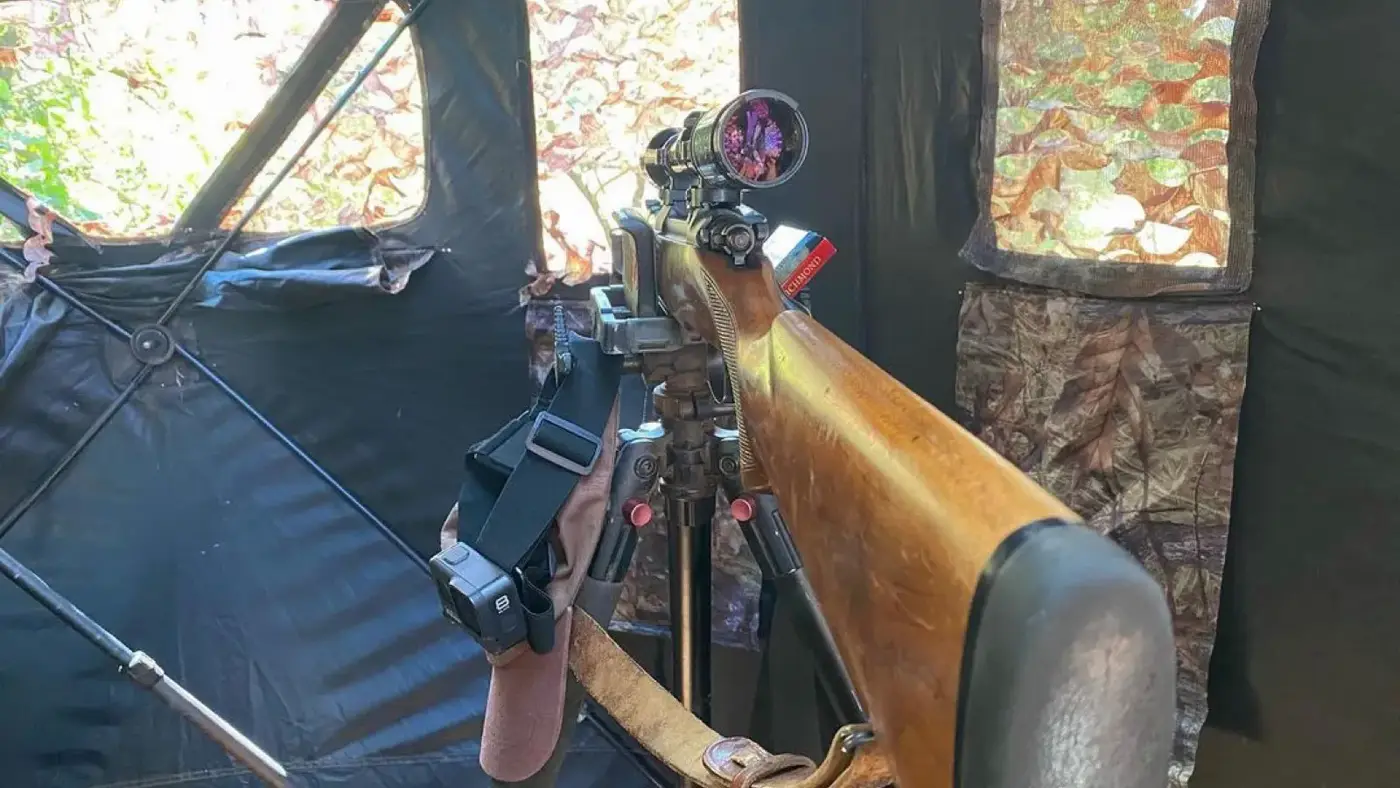
The waterhole blind is a little “yurt”: a waist-high concrete base, a light domed frame, everything plastered with clay on the outside. The windows are smeared over so glare won't spook the game; opposite the trough is a narrow loophole with a mesh curtain. The clay keeps it cool. Inside you mustn't make noise or step out, so you take care of everything beforehand.
We were lucky to find a herd of young sable at the water — the “princes of the bush”. Behind them came blue wildebeest, birds, and warthogs with a whole band of mongooses. A curious scene: the mongooses pick ticks off the warthogs, who flop onto their backs and grunt with pleasure. A real bush spa.
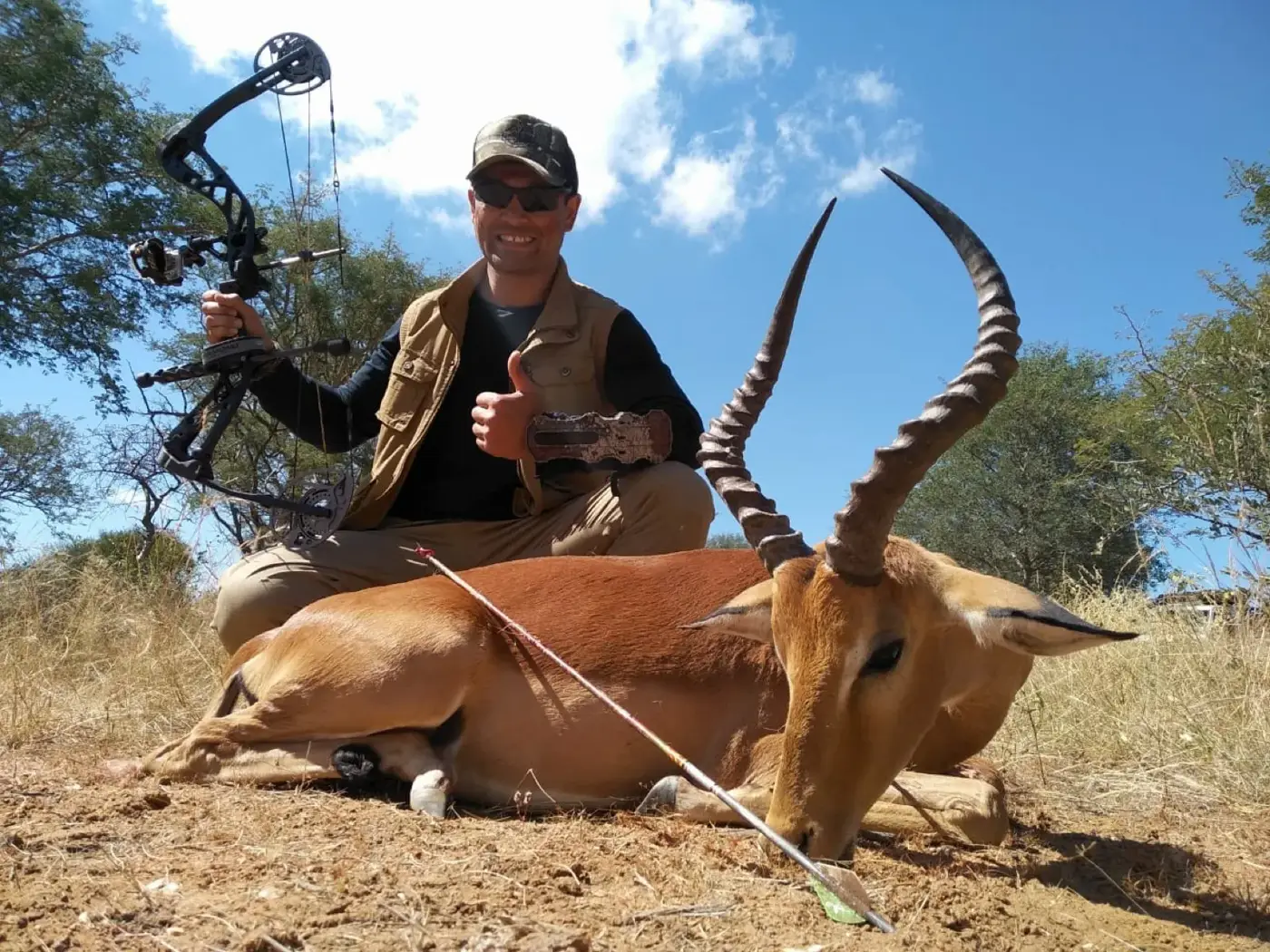
To move in total silence I took off my boots — the concrete floor gives away every step. Ninja mode. Impala came in. Twice I drew and let down: one was blocked, then the costly sable lined up behind — an arrow from a 70-pound bow would pass clean through an impala. At last a ram shifted clear; I drew, aimed, released — and saw the hit was a touch forward, closer to the chest.
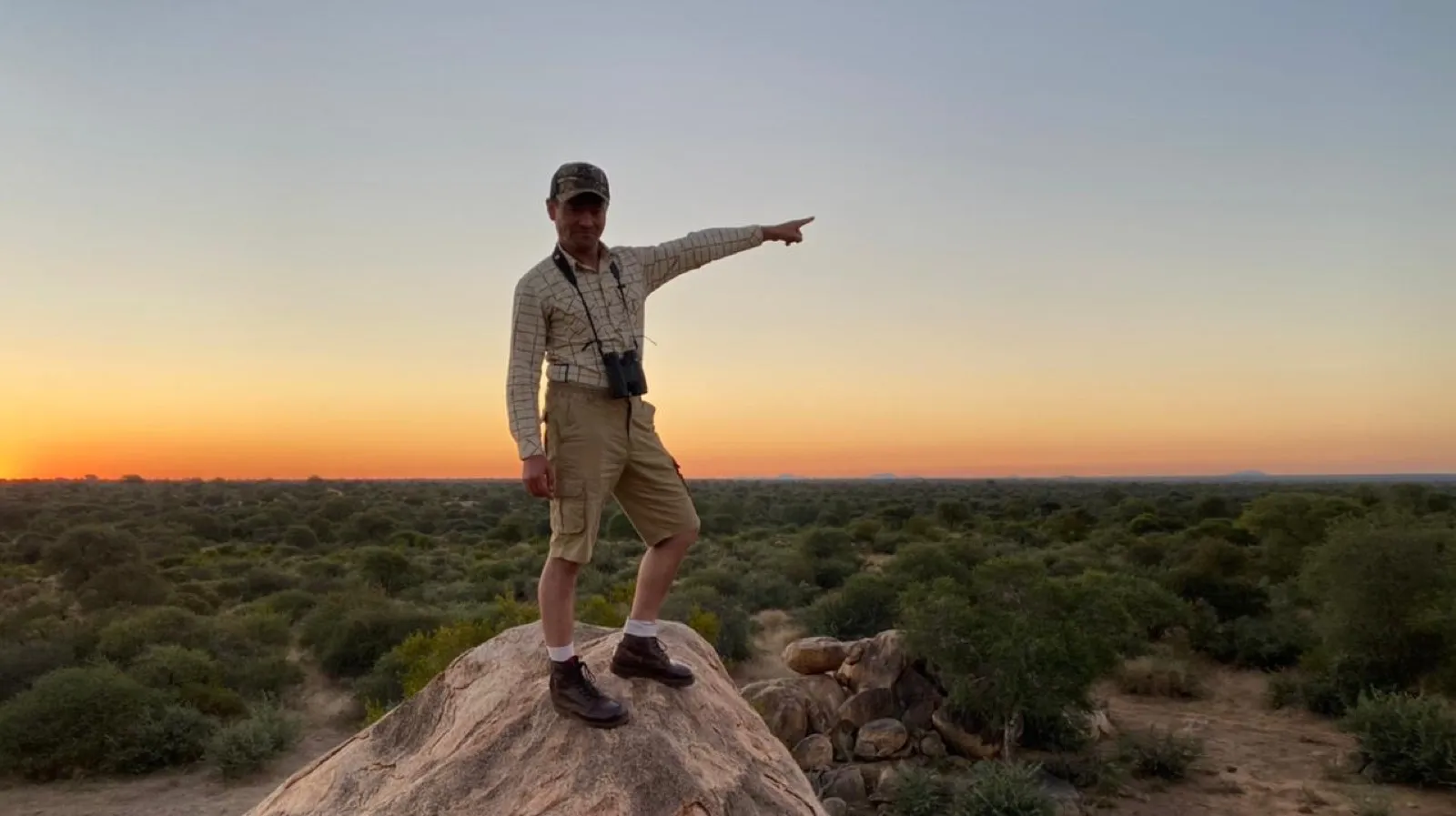
We waited, then followed the trail — the line the arrow had drawn in the sand gave us a bearing. In the thickets we called a tracker; Eddie quickly found my impala. She had run some eighty metres, fallen, and on falling driven the arrow into her own heart. The elation was boundless.
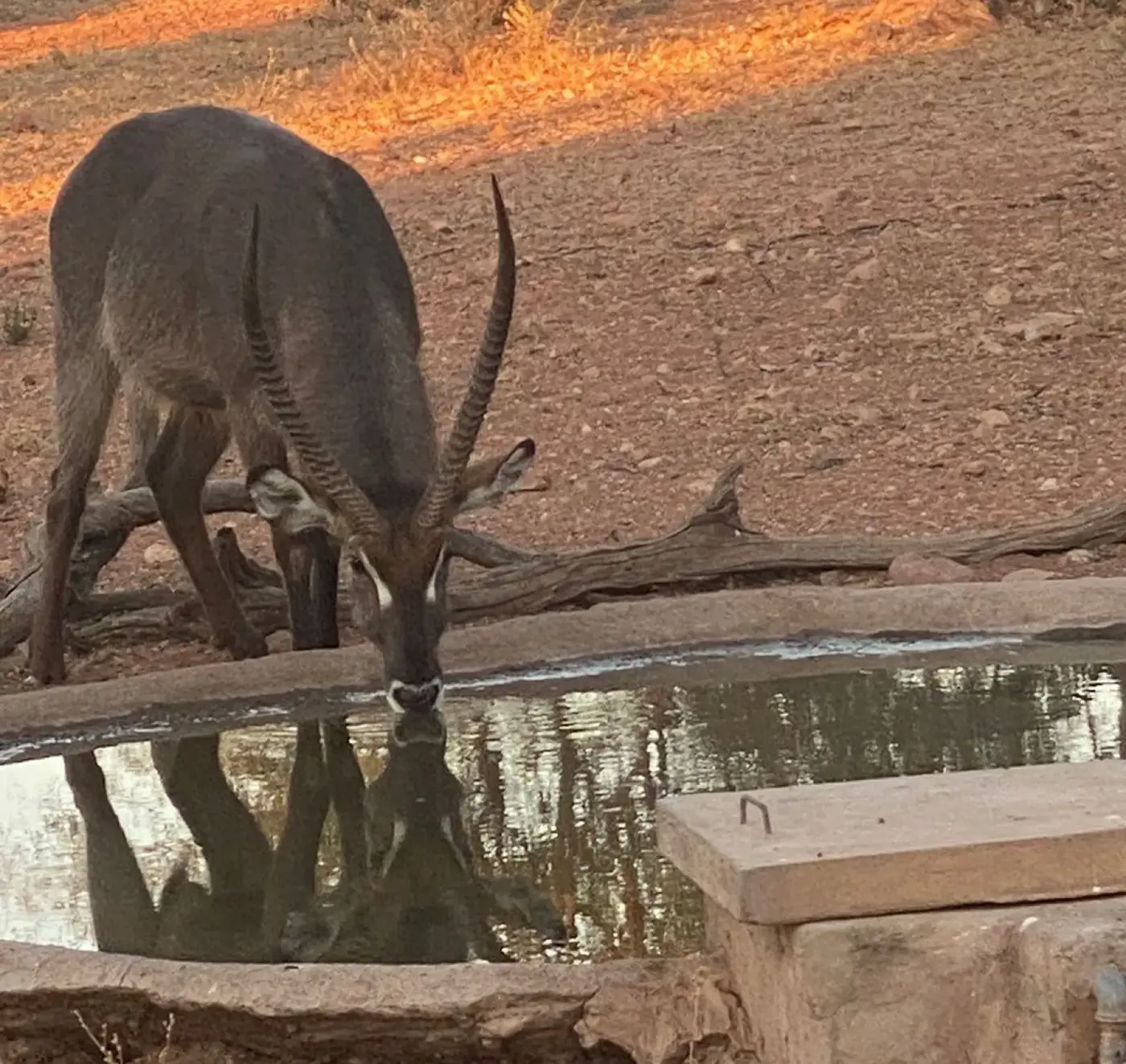
In the evening, in the golden hour between five and six, the game poured to the water as if from a horn of plenty: parrots, doves, a family of guineafowl — I counted exactly 38. Trophy kudu, wildebeest and waterbuck came in. The leopard never showed, nor the oryx — Murphy's law is reliable on a hunt. That's what makes it more interesting than a trip to the butcher — and a fine reason to come back.